
Recent regulations from insurance agencies, fire marshals, and other authorities now require heat transfer fluids to operate below their flashpoints, adding safety but also creating challenges for manufacturers. Companies often find themselves needing to lower operating temperatures, hunt for fluids with even higher flashpoints, or consider shutting down equipment.
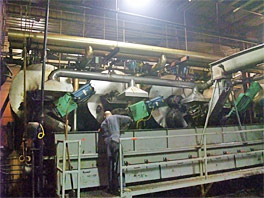
Atwood Pet Foods, a leading Canadian deadstock rendering company, faced this dilemma in 2006 when Ontario’s Technical Standards and Safety Authority (TSSA) required their imported batch cookers to use a fluid at least 50°F under its flashpoint—demanding a flashpoint above 500°F (260°C).
Confronted with potentially expensive retrofits or replacements, Atwood’s Ken Maltby quickly realized how difficult it was to source a suitable high-flashpoint thermal fluid. “I reached out to nearly every thermal fluid supplier I could find, but it wasn’t until I contacted Duratherm that I discovered the right product,” Maltby explained.
Duratherm provided more than just one solution—they offered Atwood multiple fluid options with flashpoints meeting the new requirements. After a careful technical review, Duratherm G, known for its strong resistance to oxidation, emerged as the best choice.
Michael Bates, Duratherm’s Technical Director, shared: “With three fluids featuring flashpoints over 500°F—and one reaching 615°F—we’re able to help customers find not only high-flashpoint fluids, but also products that check other important boxes like compatibility, performance, and long-term stability.”
Since 2006, Atwood has expanded by adding three new cookers at its Ontario facility. Currently, the team is tackling its most ambitious initiative yet: building a gasification system designed to safely eliminate contaminated beef protein. This innovative system will harness the process’s energy to heat Duratherm’s thermal fluid, powering Atwood’s rendering operations.
As a result, Atwood will be able to retire its gas-fired thermal heater and save about 1,000,000 cubic metres of natural gas each year.

Learning Centre
Procédures appropriées d'entretien et de remplacement des fluides
Avec littéralement des milliers d'utilisations pour les fluides caloporteurs, il ... Read more
Procédures et intervalles d'échantillonnage recommandés par Duratherm
Les fluides Duratherm sont conçus pour avoir une longue durée ... Read more
System Flushes vs. Cleaners: What You Need to Know
People often ask for a flushing fluid when what’s really ... Read more
Working with Open Baths: Key Considerations
Explore our latest whitepaper focused on best practices for open
Choosing the Right System Cleaner
Although the goal is to avoid ever needing to clean
Heat Transfer Fluid Maintenance and Change-Out Guide
With thousands of thermal fluid applications, exact oil change schedules

